
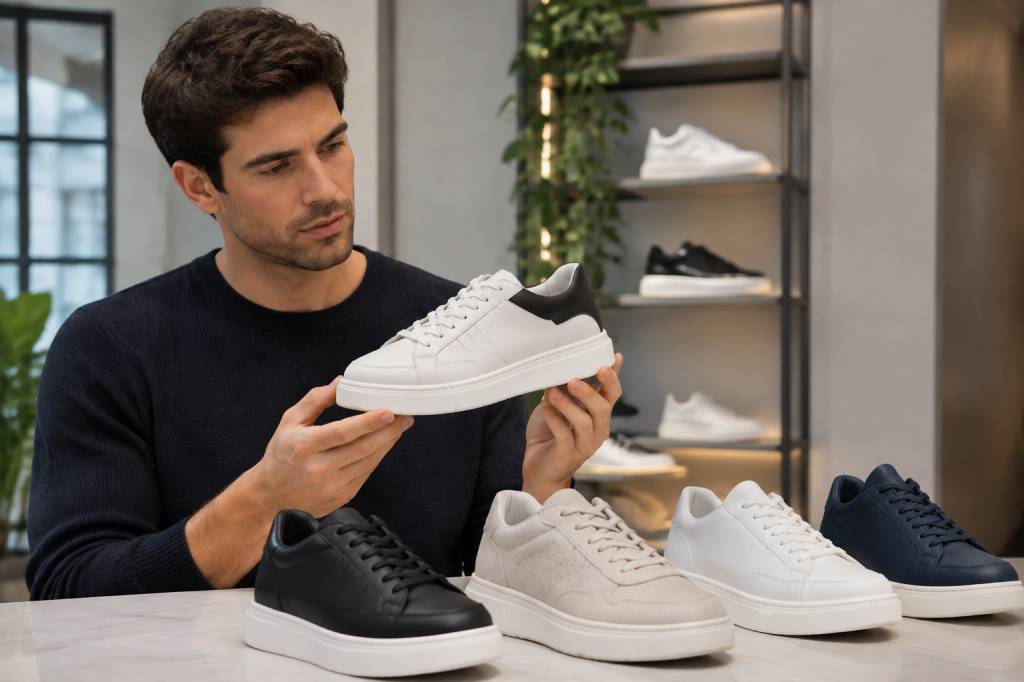
Height-boosting sneakers promise two things at once: a little extra height and the easy, everyday feel of trainers. That sounds straightforward—until you start comparing hidden lifts, thick soles, sizing charts, and styles that look either sharp or suspiciously bulky. The right pair should feel like sneakers first and a height boost second. If you notice the lift before you notice the shoe, something may be off.
Comfort is not a bonus feature. It is what makes a pair worth wearing beyond a quick try-on at home. Here’s how to choose tall trainers that suit your feet, your wardrobe, and the way you actually move through the day.
Know Where the Extra Height Comes From
Height-boosting sneakers usually add height in one of two ways: through a thicker outsole or through an internal lift built into the shoe. Some combine both. Each option has a different look and feel, so it helps to know what you’re shopping for before getting caught up in the product photos.
A thick outsole is easy to spot. It can add a modest boost while keeping the shoe’s interior close to a regular trainer. The trade-off is visual: a very chunky sole can make the shoe look heavy, particularly with slim trousers. A more discreet internal lift is concealed inside the shoe, often under a removable insole. It can create a cleaner exterior, but the space inside may feel different from what you’re used to.
There’s no magic number that makes a trainer right for everyone. A taller lift may look appealing on a product page, but added height can change the way your foot sits and how stable you feel. Think about the whole shoe, not only the height claim. A balanced design with a secure fit is usually a better everyday choice than the tallest option on the shelf.
Start With the Fit, Not the Height
Here’s a simple test: if you wouldn’t wear the sneakers without the height boost, don’t buy them just for the boost. Your toes should have room to spread, your heel should feel secure, and the shoe should not squeeze the sides of your foot. A lifted insole can take up space, so the fit you get in an ordinary pair may not translate directly.
Try shoes on later in the day if you can. Feet often swell a little after hours of walking and standing, and a pair that feels perfect first thing in the morning can become tight by afternoon. Wear the kind of socks you expect to use with the trainers, then walk around rather than judging them while seated. Pay attention to rubbing, slipping, pressure under the arch, and whether your toes touch the front when you step downhill or stop quickly.
If you’re ordering online, check the brand’s sizing guidance and return policy before choosing a size. Don’t automatically go up or down based on a generic rule: brands fit differently, and an internal lift can affect the feel in ways that vary from model to model. Measure both feet if you’re unsure, and use the larger foot as your reference. A little research is less annoying than a box of shoes that never leaves the hallway.
Look for Stability Underfoot
Extra height changes your position above the ground. That makes stability especially important. Look for a sole with a broad, level base and a tread pattern that gives you traction on the surfaces where you’ll wear the shoes. A narrow heel or a sharply sloped sole may feel less secure, especially when turning, taking stairs, or walking on uneven pavement.
Inside the shoe, the lift should feel supported rather than like a loose wedge. Your foot should not slide forward with each step, and your heel should not pop out. If the design uses a removable insole, check whether it sits flat and stays in place. A lift that shifts around is distracting at best and uncomfortable at worst.
Try a few ordinary movements during a fitting: walk briskly, turn, climb a step, and stand still for a minute. These small checks can reveal issues that a few slow steps across a carpet will miss. You’re not auditioning for a sports team; you’re making sure the shoes behave like shoes.
Choose Materials That Work for Your Routine
The upper material affects comfort, breathability, and how quickly the trainers look worn. Mesh and knit fabrics often feel light and airy, which can be useful if you’re on your feet for long stretches or live somewhere warm. Leather and synthetic leather may offer a more structured, polished appearance and can be easier to wipe clean, though they may feel less breathable.
Also check the lining and collar around the ankle. A stiff edge can rub during the first few wears, and extra padding can feel cozy in the shop but too warm over a full day. If you expect to walk a lot, look for a cushioned footbed and a sole that bends naturally near the ball of the foot. A shoe that is rigid from heel to toe can make your stride feel awkward.
Water resistance is another practical detail, but don’t assume every sleek-looking trainer is ready for a rainy commute. Check the product description and care instructions. If the shoes are not designed for wet weather, a protective spray may help, but it won’t turn a fashion sneaker into a waterproof boot.
Match the Silhouette to Your Clothes
A good pair should fit into your existing wardrobe instead of demanding a new one. Low-profile tall trainers work well with straight-leg jeans, chinos, and casual trousers. Chunkier designs can balance wider-leg pants or relaxed streetwear. With very narrow trousers, an oversized sole may look top-heavy. That’s not a fashion law; it’s just a proportion worth checking in the mirror.
Color also matters. White, black, gray, and navy are easy to wear repeatedly, while a bold color or contrast sole can make the sneakers the focus of an outfit. If these will be your everyday pair, a simple colorway gives you more options. If you already own the basics, a stronger design can add personality without requiring much effort.
Pay attention to the shape from the side. Some height-boosting sneakers disguise their lift with layered midsoles or a gently raised heel. Others rely on a conspicuously thick platform. Neither approach is automatically better. Ask yourself whether the profile looks natural with your clothes and whether you’d feel comfortable wearing it in the places you have in mind.
Be Realistic About the Occasion
Not every tall trainer is built for every activity. A comfortable walking sneaker may be suitable for commuting, shopping, travel, and casual outings. That does not automatically make it a good running shoe, court shoe, or hiking shoe. Sports with quick direction changes need footwear designed for that movement, with the right grip and support. A height-boosting feature should never replace the requirements of the activity.
For work, consider the dress code and how long you’ll be standing. A clean, understated design can fit into a smart-casual wardrobe, while a bright, heavily layered sneaker may be better for weekends. For travel, look for a pair that is comfortable over several hours and easy to pair with more than one outfit. The best travel shoe is rarely the one you bought for a single photo.
If you’re new to elevated sneakers, wear them for shorter stretches at first. Give your feet time to adjust to the different feel, and stop if you notice pain rather than assuming you need to “break them in.” Mild stiffness may ease as materials soften; persistent pressure or instability is a fit problem, not a character-building exercise.
Check the Details Before You Buy
Product photos can make a shoe look more substantial—or more discreet—than it appears in person. Read the specifications and look for clear information about the lift, materials, insole, and sizing. Customer reviews can help identify patterns, such as a narrow toe box or a heel that runs loose. Treat individual comments as clues, not guarantees; people’s feet and expectations differ.
Use this quick checklist before you place an order:
-
Does the brand explain how the height is added?
-
Is there enough room in the toe box with the lift in place?
-
Does the sole look broad and stable enough for your daily routes?
-
Are the materials suitable for your climate and routine?
-
Can you return or exchange the shoes if the fit is wrong?
-
Will the design work with clothes you already wear?
It’s also worth checking the weight. A bulky trainer may feel fine for a few minutes but tiring after a long day. If you can try the shoe in person, compare it with a regular sneaker you find comfortable. If you’re shopping online, look for weight details and reviews that mention extended wear rather than just first impressions.
Break Them In the Sensible Way
Even a well-fitting pair can take a little time to feel familiar. Start with an hour or two at home or on a short errand. Then build up to longer outings if they remain comfortable. This gives you a chance to notice rubbing or pressure before you commit to a full workday.
Keep the first outings simple. Don’t debut new lifted trainers on a long city walk, a day at an amusement park, or a trip where you’ll be rushing between terminals. That’s how a small fit issue becomes the main event. If a hot spot appears, check the lacing and socks, but don’t keep wearing shoes that cause pain.
And don’t over-tighten the laces to compensate for a loose fit. Snug lacing can help hold your foot in place, but cranking down on it may create pressure across the top of your foot. The shoe should secure your heel without turning the upper into a clamp.
Make the Practical Choice
The ideal tall trainers are not necessarily the ones with the biggest lift or the most attention-grabbing design. They’re the ones that feel secure, suit your daily routine, and look right with the clothes you already own. A modest boost in a comfortable, well-balanced sneaker will usually get more wear than an ambitious pair that stays in the closet.
Before buying, picture a normal day: your commute, the time you spend standing, the weather, and the places you’ll walk. Then choose the pair that can handle that day without asking you to compromise on comfort. Height may be the reason you start browsing, but fit, stability, and versatility are what make a pair earn its place by the door.